Most sheets that disappoint do not do it because of the thread count. They do it because they are the wrong depth for the mattress, or the wrong fibre for the wash the household can realistically give them. Both are decided before you ever get to the number on the packet.
Start with the mattress, not the bed
UK bed names are consistent between retailers. The mattresses are not. A bed described as a double is 135 x 190 cm, but the mattress on it might be 20 cm deep or 32 cm deep, and a topper adds its own thickness on top of that.
| Size | Mattress | Feet and inches |
|---|---|---|
| Single | 90 x 190 cm | 3ft x 6ft 3in |
| Small Double | 120 x 190 cm | 4ft x 6ft 3in |
| Double | 135 x 190 cm | 4ft 6in x 6ft 3in |
| King | 150 x 200 cm | 5ft x 6ft 6in |
| Super King | 180 x 200 cm | 6ft x 6ft 6in |
Measure from the top face of the mattress to the base, and add the topper if you use one. That total is the pocket depth you need.
Pocket depth is the measurement people get wrong
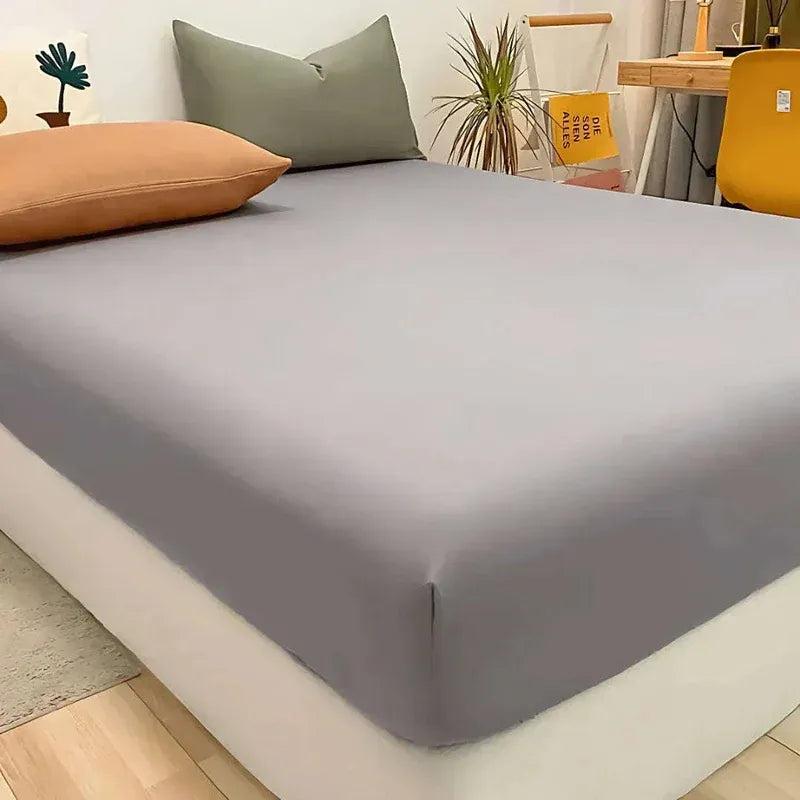
The pocket is the elastic skirt that travels down the side of the mattress. A standard sheet is cut for around 25 cm. A deep one is usually 30 cm, and an extra-deep around 35 cm.
A sheet that is too shallow will seem to fit when you make the bed and will have let go of two corners by morning — the elastic is under tension the whole time and it loses that argument. A sheet that is slightly too deep simply tucks. If you are between sizes, size up.
Weave: percale or sateen
This is a preference, not a quality ladder.
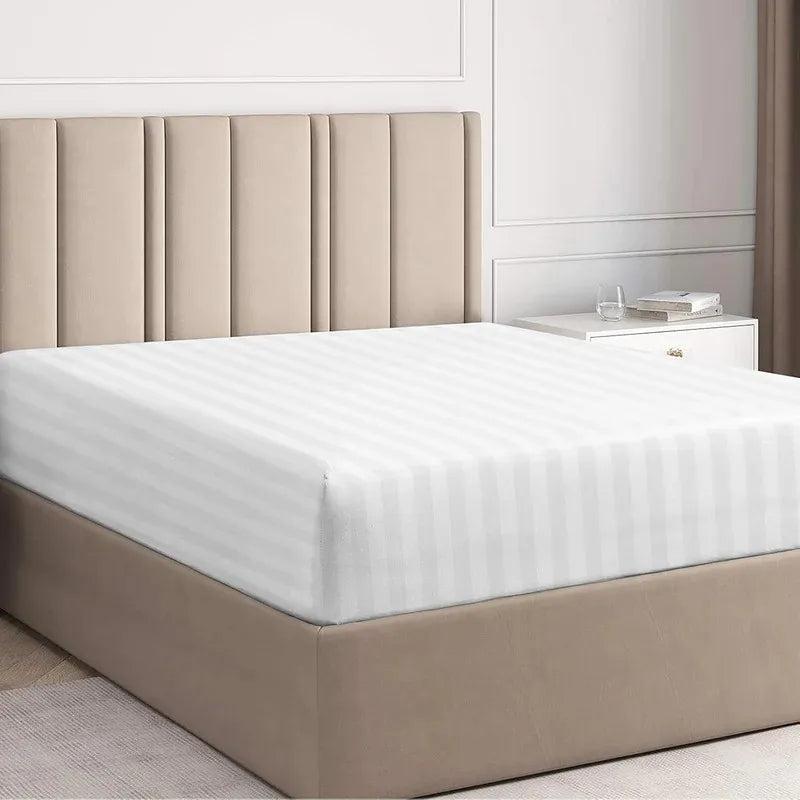
- Percale is a one-over-one-under weave. It is matte, crisp and cool, it is what hotel beds usually feel like, and it softens with every wash.
- Sateen floats more threads on the surface. It is smoother, slightly warmer and has a faint sheen.
If you sleep hot, percale. If you like a bed that feels silky, sateen.
Thread count, honestly
Thread count is the number of threads in a square inch, and it is useful up to a point. Past roughly 400 the only way to raise the number is to use thinner multi-ply yarns and count each ply, which is how a 1000-count sheet can feel worse than a 200-count one. A 180 to 400 count in a decent cotton or polycotton is the range where the number means what it appears to mean.
Fibre decides the upkeep
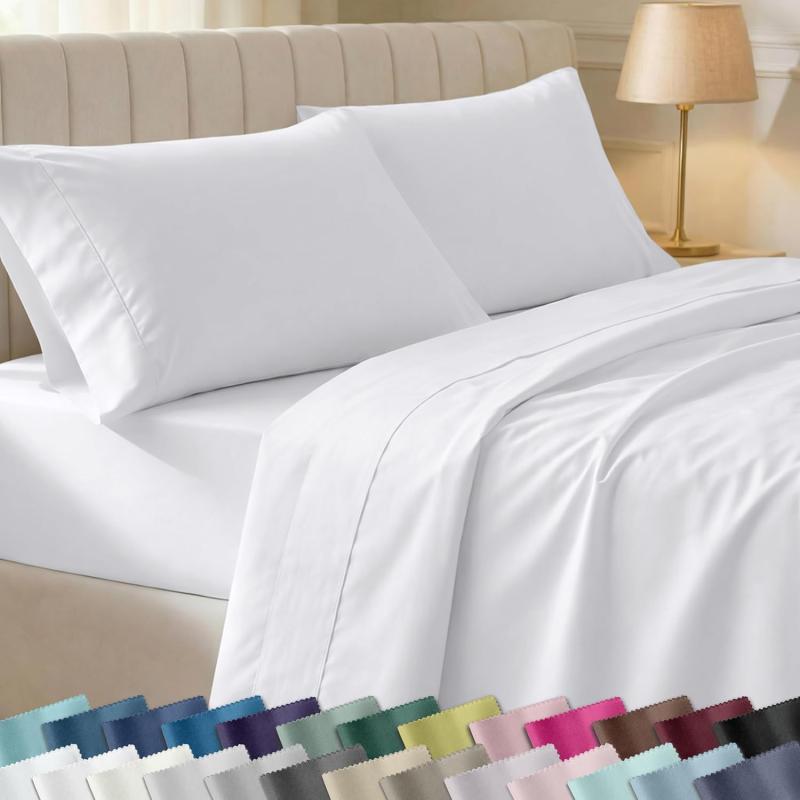
Pure cotton is cooler and more breathable, and it creases — it wants ironing or a tolerance for a rumpled bed. Polycotton creases far less, dries faster and survives a harder wash, which is why it is what most guest houses buy. Neither is the better sheet in the abstract; they are better at different jobs.
What we would buy
Two sets per bed, in a colour you can buy again. A bed that has to wait for the machine to finish is a bed that gets made badly, and a matched stock is worth more than one perfect set.
Our fitted sheets and flat sheets list their pocket depth in the name, and the size guide has the full chart. If you are buying for a business, bedsheets for hotels and B&Bs covers what changes when the laundry is commercial.