Almost everything that separates bedding that lasts from bedding that does not is invisible in a photograph. Here is where the difference actually lives.
1. The seams
A double-stitched or French seam survives a commercial wash; a single row of stitching on a raw edge frays, and it frays first at the corners of a fitted sheet where the tension is highest. Turn a sheet inside out and look at the corner before you judge the fabric.
2. The elastic
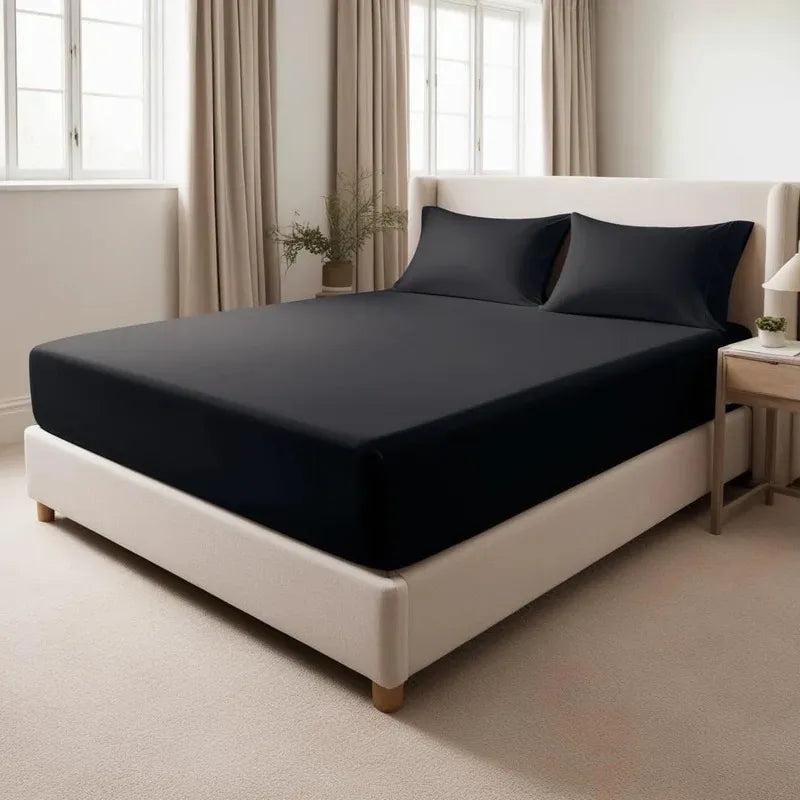
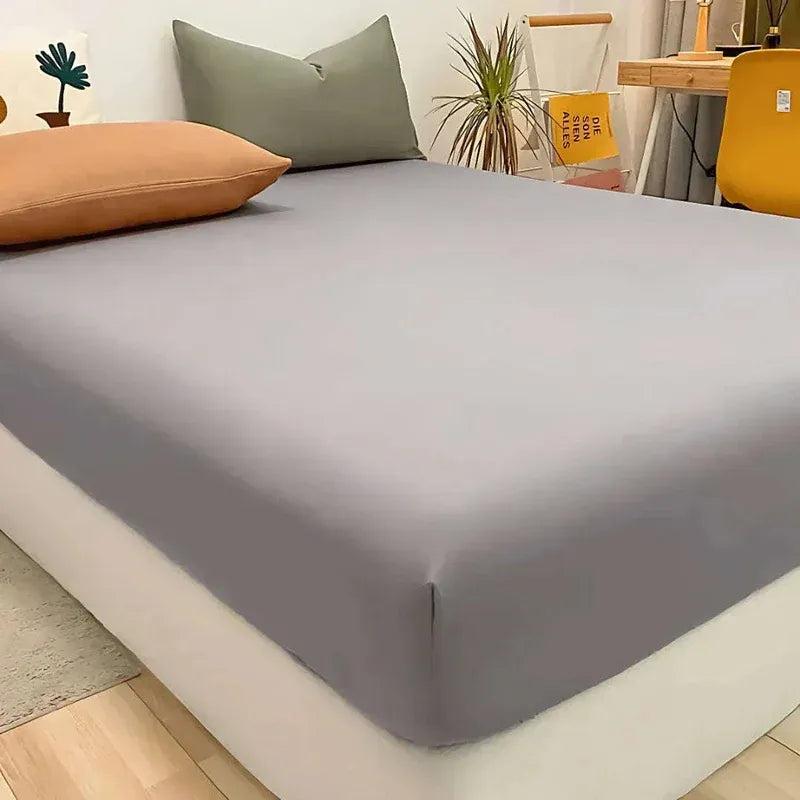
All-round elastic holds a fitted sheet flat. Elastic at the corners only is cheaper to make and lets the sides lift. The other thing that matters is how the elastic is attached: stitched into the hem it keeps its tension for years; glued or tacked, it goes slack and the sheet becomes a size too big.
3. Colourfastness
This is where cheap bedding usually gives itself away. A colour that is dyed through holds after fifty washes; a colour that is printed on fades unevenly, and the fade shows worst where the sun lands. If you expect to buy the same colour again in a year — which anyone with more than one bed does — this matters more than the shade itself.
4. Fibre and weave, matched to the wash
Pure cotton is cooler and more breathable; polycotton creases less and survives a hotter, more frequent wash. Neither is better in the abstract. What makes bedding feel cheap is a mismatch: a delicate fibre in a household that washes hot, or a heavy polyester in a bedroom that is already warm.
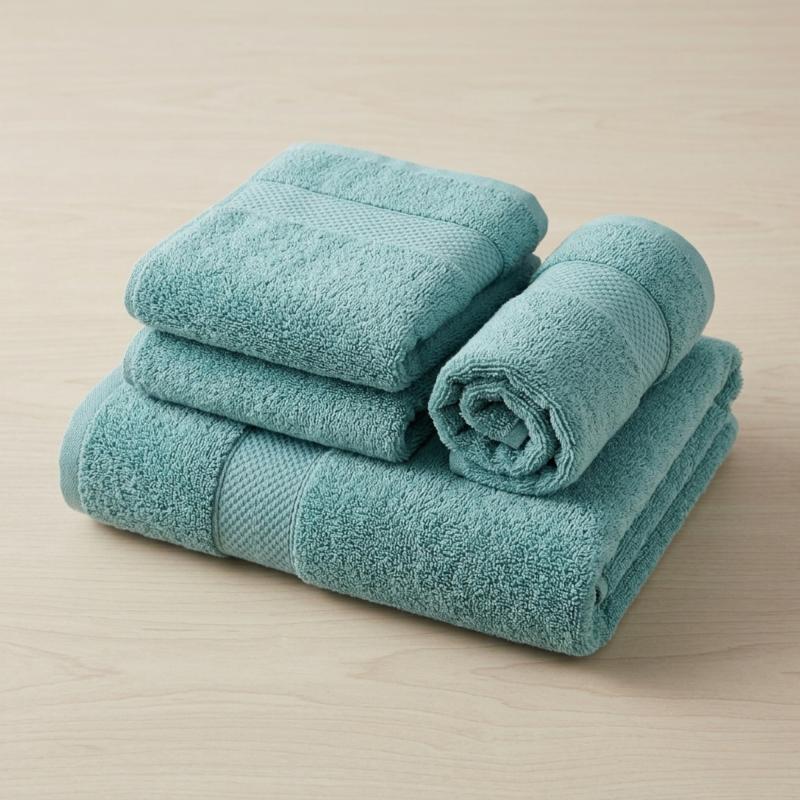
In towels the equivalent number is GSM. In duvets it is tog and fill power. In sheets it is the weave, not the thread count — see how to choose bedsheets for why a very high count is not the signal it appears to be.
5. Consistency between batches
Nobody notices this until the second order. If a white is slightly different from the white you bought last year, a stock of linen stops being interchangeable, and a linen cupboard that cannot be mixed is twice the size for the same result. It is the single biggest practical difference between buying from a range and buying what is cheapest each time.
The two that do not matter as much as the label suggests
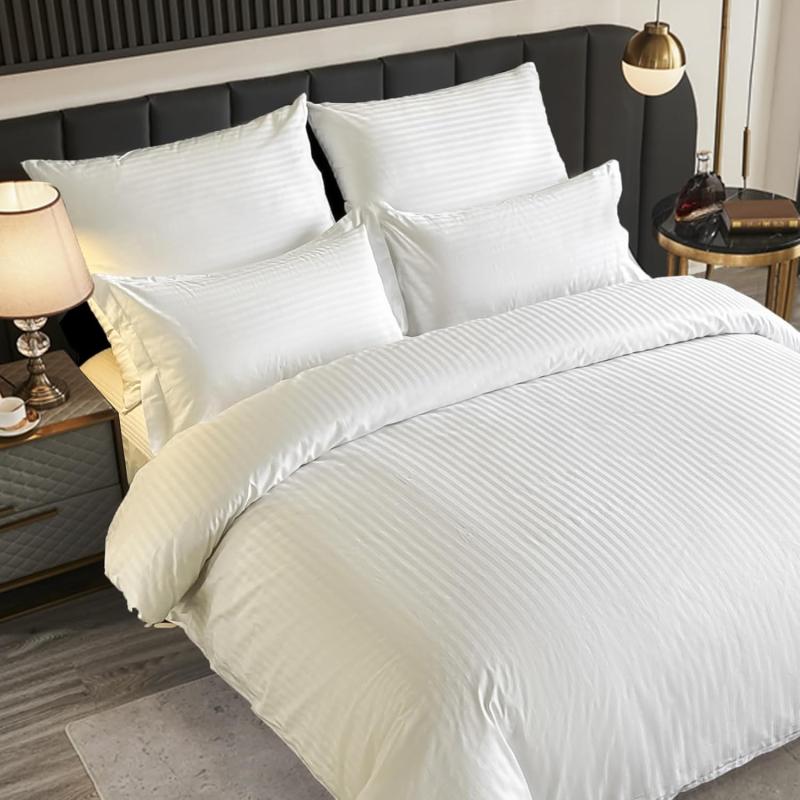
Thread counts above about 400, which are reached by counting plies rather than threads. And brand-named "hotel quality", which is a description rather than a standard — what makes hotel linen hotel linen is a GSM, a weave and a colour you can reorder, all of which you can check yourself.
If you want the short version: buy a fibre that suits your wash, check the corners, and choose a colour you can buy again. Our bedding range lists the weave, the depth and the figure that matters for each line, and where to save and where not to covers the same ground from the other end.